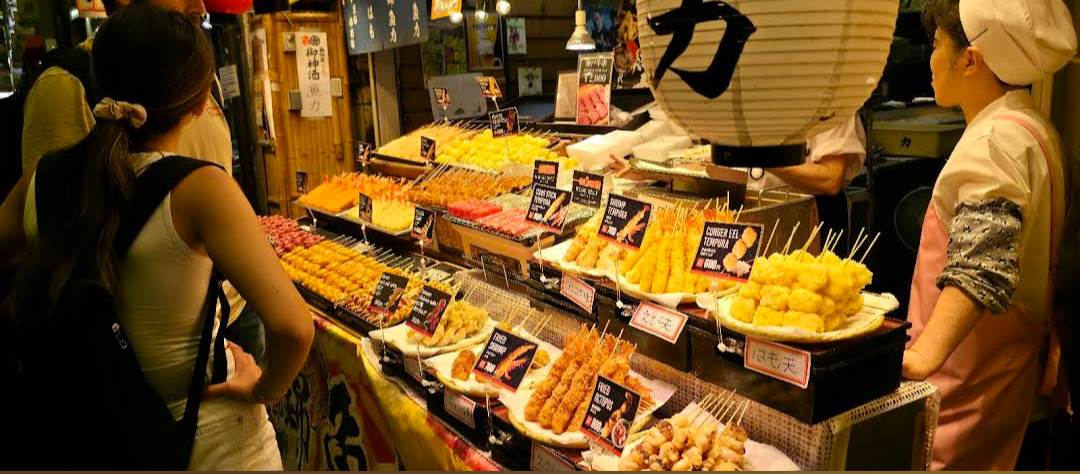
Nishiki Market, Early
Nishiki Market · 錦市場
At 8:15 in the morning, the metal shutters are still rattling open and vendors are stacking fresh tofu and arranging pickles in lacquered trays. The covered arcade smells of roasting tea and dashi stock. A fishmonger offers you a sliver of sashimi on the tip of a knife. You are one of maybe twenty people in the entire 390-meter market. This is the Nishiki that Kyoto locals have known for four hundred years.
About
Nishiki Market is a narrow, covered shopping street running east-west through central Kyoto, lined with roughly 130 shops and stalls selling everything from Kyoto pickles (tsukemono) and fresh tofu to Japanese knives and seasonal wagashi sweets. It has operated in some form since the early 1600s, when fresh fish from the nearby rivers was sold here, and locals still call it "Kyoto no Daidokoro" — Kyoto's Kitchen.
The market's problem is its own fame. By late morning, the 3.5-meter-wide arcade is packed with tour groups eating street food on sticks and blocking the narrow passage. Vendors who once served primarily to local restaurant chefs and home cooks now cater increasingly to tourists, with some stalls selling overpriced novelty snacks rather than genuine Kyoto ingredients.
But arrive before 9:00am and the market reveals its true character. The tourist-oriented stalls are not yet open. Instead, you see the old-guard vendors — the pickle shops, the tofu makers, the knife sharpeners, the tea merchants — setting up for the day. These are the shops that have occupied their stalls for generations, and in the quiet of early morning, their owners are far more likely to chat, offer samples, and share the stories behind their products.
Getting There
Address Nishiki Market, Nishikikoji-dori, Nakagyo Ward, Kyoto
Nearest station Shijo Station (Kyoto Municipal Subway) — 3 min walk north
Alternative Karasuma Station (Hankyu Line) — 2 min walk
Hours Most traditional shops open 9:00–9:30am (some earlier). Tourist-oriented stalls open 10:00–11:00am. Closed Wednesdays for some shops.
Entrance fee Free to walk through
Enter from the east end (near Teramachi-dori) for the quietest start. The western end near Takakura-dori tends to open slightly earlier and has more traditional food vendors.
Best Time to Visit
The ideal window is 8:30am to 9:30am. Not all stalls will be fully open, but the ones that matter — the centuries-old specialty shops — are setting up and beginning to serve. The light streaming through the arcade roof is soft and golden. The pace is unhurried. You can actually stop, look, taste, and talk to the vendors without being swept along by a river of people.
By 10:30am, the first tour groups arrive and the atmosphere shifts. By noon, the market can be uncomfortably crowded, particularly on weekends and holidays. If you cannot manage an early-morning visit, the last hour before closing (around 5:00–5:30pm) is the second-best window, when vendors sometimes discount perishable items.
The market is quieter on weekdays at any hour. Wednesday is a mixed bag — some traditional shops close, but this means the market is much emptier if the open stalls are sufficient for your interests.
Find It on the Map
Insider Tips
Start at the western end. The west end (Takakura side) has more of the traditional ingredient shops — the Kyoto pickle specialists, the fresh yuba (tofu skin) makers, and the dried fish vendors. These open earlier and cater more to locals. The east end near Teramachi has shifted toward tourist street food.
Buy a knife. Nishiki has several excellent knife shops, including Aritsugu (established 1560), which has been making knives for Kyoto chefs for over 450 years. Early morning is the best time to visit these shops, when the staff can give you personal attention and help you choose the right blade. They will engrave your name in Japanese characters for free.
Try the seasonal tsukemono. Kyoto pickles change with the seasons. In spring, look for sakura-preserved vegetables. In winter, the senmaizuke (thinly sliced turnip pickles) are a Kyoto specialty you will not find this good anywhere else. Vendors at the traditional pickle shops will let you taste extensively before buying.
Do not eat while walking. This is considered poor manners in Kyoto, and the market has posted signs asking visitors to eat at the stalls rather than walking with food. Many stalls have small standing counters where you can eat comfortably.
Nearby Spots
Nishiki Tenmangu Shrine
At the east end of the market, this small shrine is dedicated to the god of learning. Its torii gate literally passes through the walls of the surrounding buildings — a quirky Kyoto sight that is easy to miss if you are not looking up.
Teramachi & Shinkyogoku Shopping Arcades
Two parallel covered shopping streets running north-south at the east end of Nishiki. Teramachi has bookshops, antique stores, and traditional craft sellers. Shinkyogoku is more mainstream but has several small temples tucked between the shops.
Rokkaku-do (Choho-ji Temple)
A five-minute walk north. This hexagonal temple in the middle of the city is said to be where ikebana (flower arrangement) originated. There is a small free garden and a resident flock of white doves. A peaceful pause after the market's sensory richness.
Four hundred years of Kyoto's culinary heart, compressed into a single narrow arcade. The secret is not what you buy — it is when you arrive.
Last updated: 2026-03-03